

Caring for Artisan Wood Utensils: Cleaning and Maintenance Steps

Quick Summary
Clean wood kitchen utensils by hand in warm water with a small amount of mild dish soap, rinse under running water, and dry right away with a clean towel. Keep them out of the dishwasher and away from long soaks, then apply a thin coat of food-grade mineral oil every few weeks to keep the wood from drying out.
- Wash by hand in warm water with a small amount of mild, unscented dish soap.
- Never leave wooden utensils to soak in the sink or put them in the dishwasher.
- Dry promptly with a clean towel, then stand the utensil upright to air-dry for at least an hour.
- Use a sponge with the soft side facing the wood, since the scratchy side can roughen the surface.
- Apply a thin coat of food-grade mineral oil every 4 to 8 weeks for utensils used daily.
Table of Contents
- Why Artisan Wood Utensils Need Different Care
- How to Clean Wooden Spoons the First Time
- Step-by-Step: How to Deep Clean Wooden Spoons and Utensils
- Choosing a Food-Safe Mineral Oil for Wooden Utensils
- How Often to Oil and Maintain Wood Utensils
- How to Clean Wooden Spoons with Mold and Other Damage
- Keep Your Wooden Utensils in Use for Years
- Frequently Asked Questions
Caring for Artisan Wood Utensils: Cleaning and Maintenance Steps
Last Updated: November 22, 2026
Why Artisan Wood Utensils Need Different Care
Artisan wood kitchen utensils are not the same as mass-produced plastic or steel. Each spoon or spatula is shaped by hand, often from a single piece of hardwood, and its grain is left open to the air. That open grain is what gives it character, and it is also what makes it need a little extra attention.
Artisan pieces are meant to be used every day. Treated well, they can last for years. Treated like a dishwasher item, they are more likely to crack, warp, and stain.
Wood soaks up moisture and oils. It does not sit on top of a surface the way plastic does. That means water, heat, and harsh detergent can all work into the grain and change the wood over time.
- Wood absorbs water and swells, then shrinks as it dries.
- Heat from dishwashers can dry out the natural oils in the wood.
- Strong detergents strip away the protective finish.
The good news is that caring for wood is simple. You mostly need to avoid a few mistakes and keep the wood lightly oiled.
How to Clean Wooden Spoons the First Time
Before you use a new wooden spoon, give it a quick first clean. New pieces can carry dust or finish residue from manufacturing.
Wash the spoon by hand in warm water with a small amount of mild, unscented dish soap. Rinse it quickly under running water. Dry it right away with a clean towel.
A simple first-use approach is to rinse, dry, and let the spoon air-dry standing upright for an hour before storing.
Watch out: Never leave a new wooden spoon to soak in the sink. Even a short soak can raise the grain and leave a rough surface.
Step-by-Step: How to Deep Clean Wooden Spoons and Utensils
Deep cleaning is for times when food has stuck to the wood or the utensil smells stale. Follow these steps to clean it well without harming the wood.
- Rinse off loose food under warm running water.
- Fill the sink with warm water and a few drops of mild dish soap.
- Scrub gently with the soft side of a sponge.
- Rinse under running water until no soap remains.
- Dry the utensil with a clean towel right away.
- Let it air-dry standing upright for at least an hour.
Hand-Washing and Drying Steps
Hand washing is the safest method for artisan wood. Use a sponge with the soft side facing the wood, since the scratchy side can roughen the surface. You can find sponges that are gentle on wood and easy to rinse on our site.
Dry the utensil promptly after washing. Wood that sits wet for long periods can swell and develop cracks. Standing the piece upright on a rack lets air reach every side.
For sponges, we like the Crispy Clean Sponges. They are gentle on wood and rinse out easily after each use.
What to Avoid: Dishwashers and Long Soaks
The two biggest mistakes are putting wood in the dishwasher and leaving it to soak. Both can cause lasting damage.
- Dishwashers: Heat and harsh detergent dry out the wood and can cause cracking.
- Long soaks: Water swells the grain, which can lead to warping and splitting.
- Hot water: Very hot water can dry out natural oils faster than you might expect.
Keep wooden utensils out of the dishwasher and out of the sink full of water. Your utensils will last much longer for it.
The deep-clean steps below are the ones to follow when food sticks to the wood or the utensil smells stale.
| Step | What to do | Time or frequency |
|---|---|---|
| Rinse | Rinse off loose food under warm running water | Before cleaning |
| Soak prep | Fill sink with warm water and a few drops of mild soap | Before scrubbing |
| Scrub | Scrub gently with the soft side of a sponge | During cleaning |
| Rinse again | Rinse under running water until no soap remains | After scrubbing |
| Dry | Dry with a clean towel right away | Immediately |
| Air-dry | Stand upright to air-dry | At least 1 hour |
Choosing a Food-Safe Mineral Oil for Wooden Utensils
Oiling is what keeps artisan wood looking its best. A light coat of oil replaces the natural oils that water and washing remove.
Food-grade mineral oil is the most common choice. It is odorless, tasteless, and does not go rancid, which makes it a practical pick for kitchen tools. Look for a product labeled food-grade or food-safe, and avoid oils that are not made for food contact.
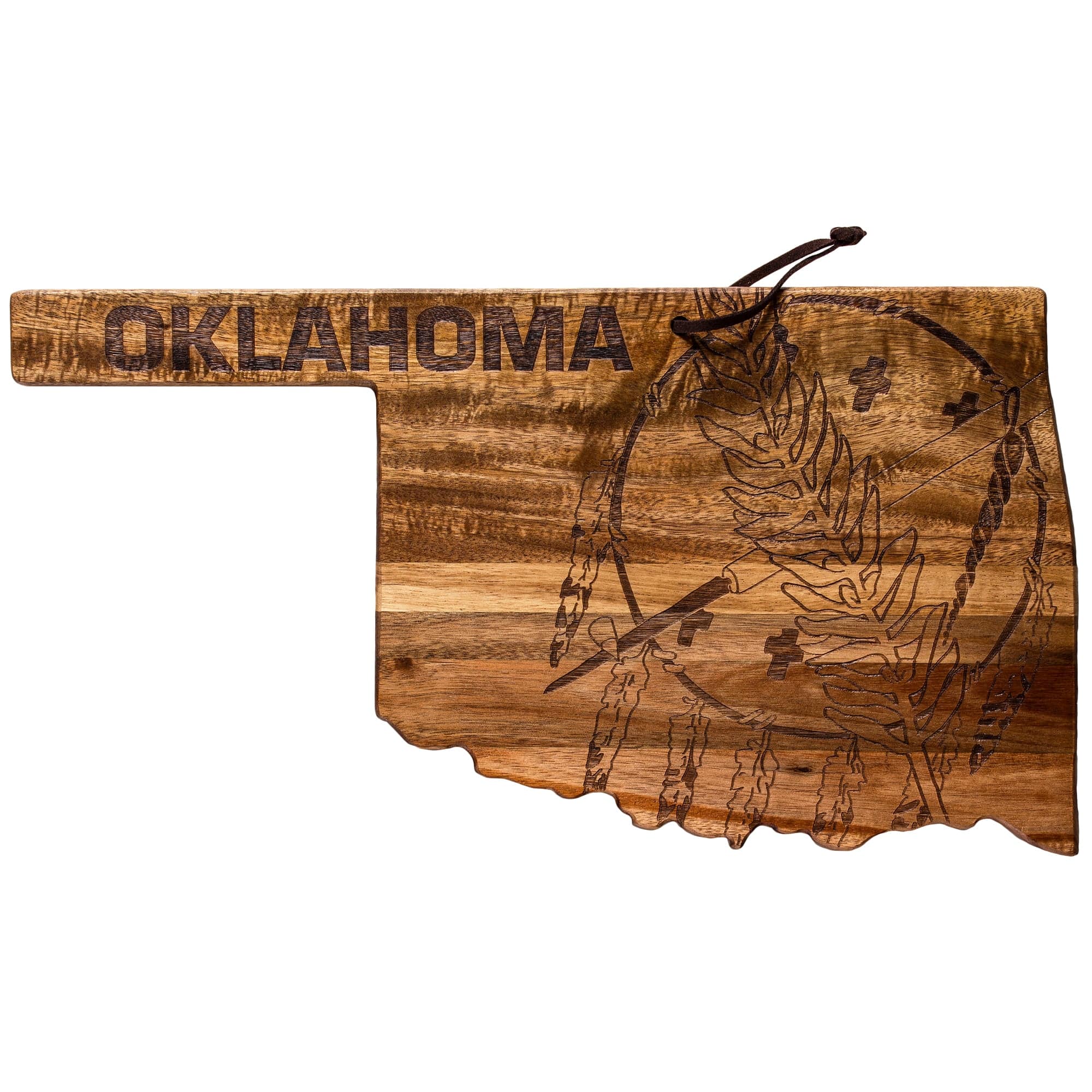
Our go-to pairing is the Rock & Branch Origins Series Oklahoma Shield Serving Board. It is a good example of a finished wood piece that benefits from the same gentle care described here.
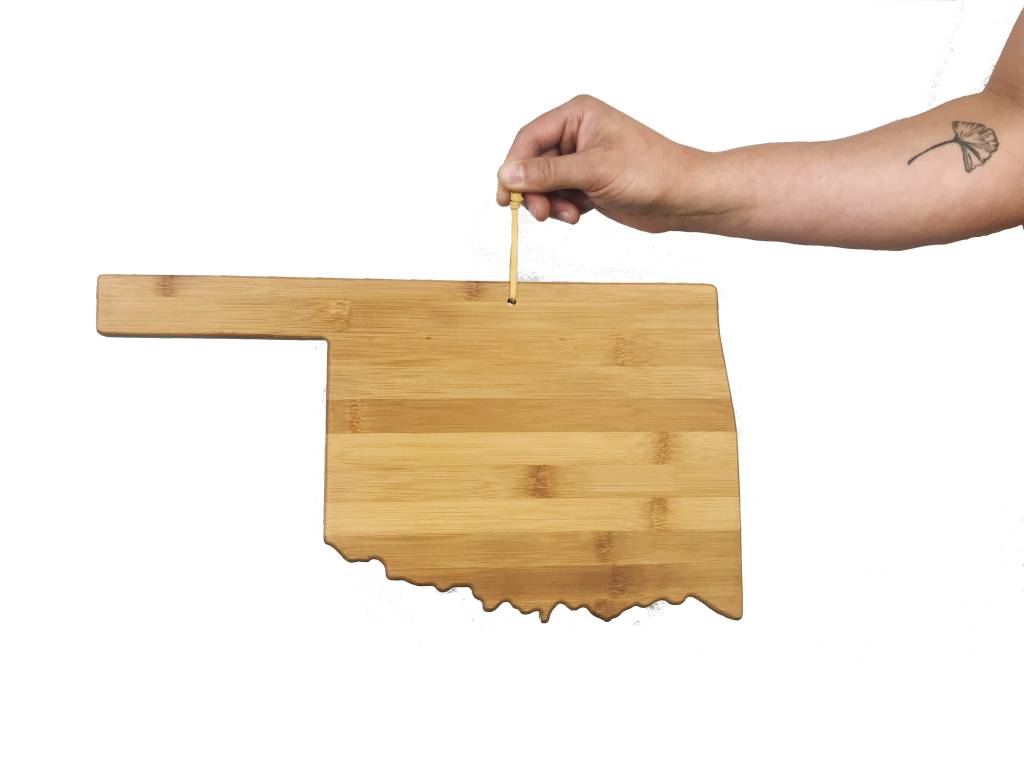
Bamboo pieces such as the Oklahoma Cutting Board are listed with a recommendation to wipe with warm water and give an occasional touch of mineral oil or olive oil to preserve the bamboo.
How Often to Oil and Maintain Wood Utensils
A maintenance schedule beats guesswork. A simple rhythm can keep artisan wood in good shape: wash after every use, inspect weekly, and re-oil when the wood tells you it is thirsty rather than on a fixed calendar.
Use this schedule as a starting point and adjust for how often you cook:
- After every use: hand-wash, towel-dry, and air-dry upright.
- Weekly: inspect for dryness, roughness, raised grain, or new cracks. Run a fingertip along the grain; if it feels fuzzy or pale, it is ready for oil.
- Every 4 to 8 weeks: apply a thin coat of food-grade mineral oil to utensils used daily. Utensils used a few times a week may stretch to every 2 to 3 months.
- Seasonally: check stored pieces you have not used in a while, and re-oil before putting them back into rotation.
Utensils washed several times a day, or kept in a humid kitchen, may dry out faster and need oil more often. Spoons used for stirring hot sauces and spatulas used for scraping hot pans also lose oil faster than a serving piece that only touches dry food.
Apply oil to clean, fully dry wood. A thin coat is enough; let it soak in for several hours or overnight, then wipe off any excess with a clean cloth. Do not oil wet wood, because the oil will not absorb well and can leave a tacky film.
Watch out: over-oiling can be as much of a problem as under-oiling. If the wood stays slick or the oil pools on the surface, wipe it off and wait longer before the next coat.
Keep a small note in your kitchen or set a phone reminder for the weekly inspection. The habit takes a minute and catches dryness before it turns into cracking.
How to Clean Wooden Spoons with Mold and Other Damage
Damage on artisan wood usually falls into a few categories: surface mold, stains and odors, raised grain, splinters, and cracks. Each has a different fix, and some damage means the utensil should be retired rather than repaired.
Surface mold. Mold needs moisture and food residue to grow. For light surface mold, scrub gently with warm water and mild dish soap, rinse, and dry in open air away from direct heat. Then let the piece dry completely before oiling. If the mold has gone deep into the grain, or the wood feels soft or spongy, it is generally safest to retire the utensil. Sanding is not a reliable way to remove mold that has penetrated the wood.
Stains and odors. A little warm water and a soft sponge often lift surface stains. For persistent odors, a paste of baking soda and water applied for a few minutes, then rinsed and dried, is a common approach. Deep stains may need light sanding with fine-grit paper, followed by a fresh coat of oil. If an odor persists after cleaning and drying, the utensil may have absorbed something it cannot release, and it is time to replace it.
Raised grain and roughness. Raised grain happens when water swells the surface fibers. Once the utensil is fully dry, light sanding with fine-grit paper smooths it, and a coat of food-grade mineral oil restores the surface. Sand with the grain, not across it.
Splinters. Small splinters can sometimes be sanded smooth if the wood around them is sound. If a splinter runs deep or the wood is splitting around it, stop using the utensil; a loose splinter can end up in food.
Cracks. Hairline cracks that do not go through the wood can sometimes be stabilized with oil and careful drying. A crack that goes deep, widens, or traps food is a retirement signal. Wood that has cracked through can harbor bacteria and is not safe for food contact.
Watch out: never repair a utensil used for raw meat if it has cracks or deep scratches. Those areas can hold bacteria that washing will not reach, and the safest choice is to replace it.
A simple rule: if you would not feel comfortable serving food with the utensil to a guest, it is time to retire it. Pieces with surface-level damage can often be repaired, but food safety comes first.
Keep Your Wooden Utensils in Use for Years
Good care turns a wooden spoon into a lasting part of your kitchen. Wash by hand, dry promptly, oil lightly, and keep the pieces out of the dishwasher and long soaks.
Ida Red General Store is happy to help you find pieces that suit your kitchen. Explore our wood and kitchen selection for more handmade options.
Frequently Asked Questions
How should I maintain my wooden kitchen utensils?
Hand-wash wooden utensils with warm water and a small amount of mild, unscented dish soap, then rinse and dry them right away with a towel. Avoid the dishwasher and prolonged soaking, since both can warp, crack or raise the grain. Store them somewhere dry with good air flow. Once the wood looks dry or pale, rub on a thin coat of food-safe mineral oil, let it soak in, and wipe off the excess. Doing this on a regular schedule keeps the wood supple and helps it last longer.
Do wooden kitchen utensils need to be oiled?
Yes, most wooden utensils benefit from occasional oiling. Water and frequent washing strip natural oils from the wood, which can leave it dry, rough or prone to cracking. Oil also helps seal the surface so it resists stains and odors. Use food-safe mineral oil and apply it only when the wood looks dull or feels dry. Skip oiling if the surface is still sealed and smooth. Over-oiling can leave a sticky film, so a light coat is enough.
What is the best oil to use on wooden utensils?
Food-grade mineral oil is the most common choice for wooden utensils because it is odorless, tasteless and does not go rancid the way vegetable oils can. Many makers also use a beeswax and mineral oil blend for a longer-lasting finish. Avoid cooking oils such as olive or flaxseed oil for routine conditioning, since they can turn sticky or spoil. Check that any product you buy is labeled food-safe for cooking surfaces.
How do you clean mold off wooden spoons?
Scrub the affected area with a soft brush and warm water mixed with a little mild dish soap, then rinse quickly and dry the spoon thoroughly. For light surface spots, this is often enough. If mold has soaked deep into the grain, or the wood is soft, cracked or smells musty, it is safer to replace the utensil. Once clean and fully dry, condition the wood with food-safe mineral oil to restore protection.


